Orchard Road retail property guide: what S$5,455 psf at Paragon tells us about the market
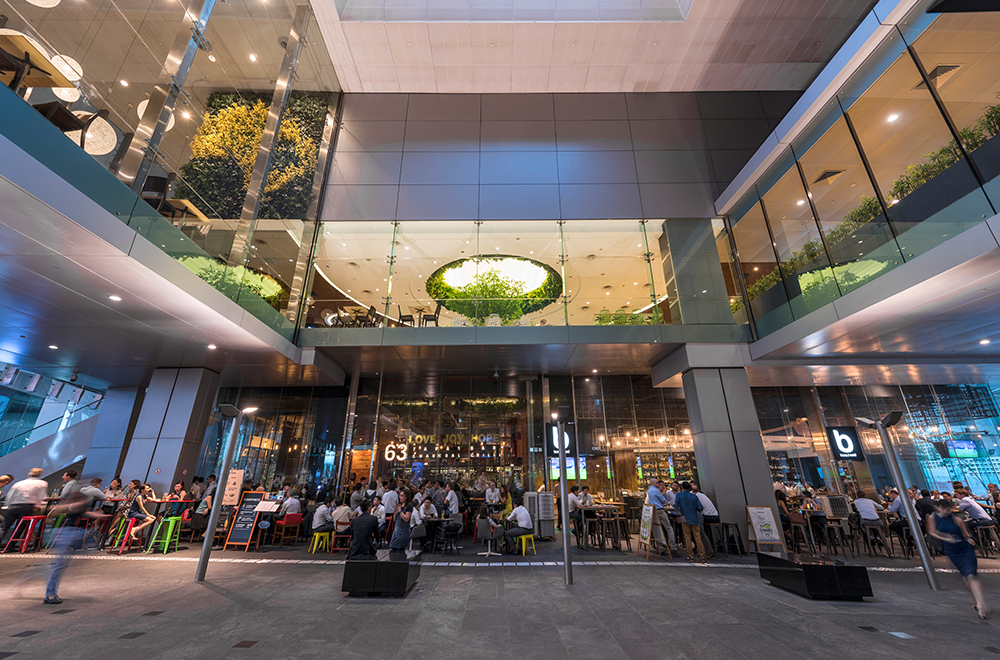
CapitaLand Integrated Commercial Trust (CICT) made one of Singapore's biggest real estate moves in recent memory on 20 April 2026, announcing it would acquire Paragon, the iconic freehold mixed-use development on Orchard Road, from Temasek-linked Cuscaden Peak for S$3.9 billion. To fund the deal, CICT simultaneously offloaded Asia Square Tower 2 to Malaysia's IOI Properties for S$2.476 billion, and launched a private placement targeting a minimum of S$600 million in fresh equity. The acquisition comes as Paragon faces pressure from newly upgraded competitors and an anticipated mall overhaul that could cost upwards of S$300 million, a renovation bill CICT says it will reassess. For CICT unitholders, the trade is a bet that Paragon's blend of luxury retail and a near-fully tenanted medical tower offers more upside than a mature CBD office block ever could.
What CICT just paid for Paragon
The S$3.9 billion sticker translates to S$5,455 per square foot on Paragon's 714,915 sq ft of net lettable area, with 491,817 sq ft of luxury retail across the lower floors and a 223,098 sq ft tower of medical suites and office space above. Annual net property income runs around S$152 million, giving a blended yield of 3.9 percent: 4.1 percent on the retail half, 3.4 percent on the medical and office half.
For context, the mark sits a touch below the high-water print of roughly S$5,928 psf NLA that CICT's 50 percent ION Orchard acquisition cleared in late 2024, and runs roughly 20 percent above the S$4,500 psf Cuscaden paid to take Paragon private just twelve months ago. CICT is buying a freehold integrated asset, fully tenanted, with a re-rated comp set in its rear-view mirror.
Two things made institutional capital comfortable paying that number. Paragon's tenant mix layers defensive medical income (long leases, sticky tenants) over luxury retail that has limited substitutes anywhere on the island. And no new Orchard mall is being built. Future supply on the corridor is effectively zero, while tourist arrivals and the high-net-worth catchment keep growing.
The case CICT is making
For CICT, the math is straightforward enough. AST2 was a leasehold Grade A office block exiting at a 3.0 percent yield. Paragon comes in at 3.9 percent blended, on freehold title, with a runway of retail and medical rent reversions that the manager argues will compound faster than CBD office could. The 90 basis point yield pickup at completion is the headline. The leasehold-to-freehold upgrade and the structural scarcity of Orchard prime retail are what is supposed to make the trade pay over the cycle. Both legs print at sub-4 percent exit yields, which itself tells you how tightly Singapore commercial property is being bid in 2026.
What District 9 retail actually rents for, by floor and unit size
A useful counterpoint to the S$5,455 psf capital value is the actual monthly rent landlords are achieving on the corridor today. URA REALIS publishes quarterly median rental data for all stamped commercial retail tenancies, broken out by floor level and floor area band. Below is the District 9 picture for the latest reference period, Q1 2026, converted from S$ per square metre to S$ per square foot.
Two patterns jump out, and both complicate the conventional picture of Orchard retail rent.
Basement is the highest-rent floor on the corridor, not ground floor. Small B1 units (up to 30 sqm) clear a median of S$37.7 psf per month in Q1 2026, well above the equivalent Level 1 rate of S$27.9 psf. This reflects how D9 malls actually work: basements are F&B, supermarket, and footfall-anchored boutique space with captive demand from MRT connectors and lift cores. Ground floor still commands a real premium, but mostly within the smallest, most visible units.
The small-frontage premium dominates floor level. A sub-30 sqm B1 unit rents at roughly 70 percent above a 100 to 300 sqm B1 unit. The same pattern holds on Level 1, where small units clear S$27.9 psf against S$14.6 psf for medium ones. By Level 2 and above, the floor-level distinction almost disappears. Rents flatten into a narrow S$9 to S$18 psf band regardless of unit size, with the occasional spike in the >300 sqm bucket driven by very thin transaction samples.
For a tenant, this should reshape the negotiation. If your operating model survives in 50 to 100 sqm on Level 2 or 3, your rent base sits in the low-teens psf. If you need ground-floor or basement frontage in a sub-30 sqm format, the corridor is priced two to three times higher. The S$5,455 psf Paragon capital value is the institutional read on the asset overall. These quarterly rent percentiles are what individual tenants and strata owners actually negotiate against.
Source: URA REALIS commercial retail rental analysis, Q1 2026 reference period.
What this means for tenants and owners
For tenants negotiating Orchard core leases into 2026 and 2027, the direction of travel is unfavourable. A landlord just validated at S$5,455 psf is not going to soften on rent reversion at renewal. Expect single-digit to low-double-digit step-ups on prime frontage where the tenant is profitable and the location is hard to substitute.
For owners, particularly strata retail holders on the corridor, the Paragon comp is supportive. Strata prices in Orchard core have historically moved within a band of the prime mall valuation, and a re-rating of the headline asset tends to pull strata valuations along over the following 12 to 24 months. Whether your unit benefits depends on floor, frontage, and how the building is performing as a whole.
The bottom line
The S$5,455 psf Paragon mark is what an institution is willing to pay in 2026 for the corridor's scarcest, most defensive freehold retail. For anyone sourcing retail or commercial space on Orchard Road this year, the practical question is more grounded: do you need ground-floor or basement prime frontage, or can your operating model take an upper-floor or non-prime unit? The Paragon print is the institutional ceiling. The URA quarterly rent ranges above are what individual tenants and strata holders actually negotiate against, and most of the corridor still transacts well below that ceiling.
Sources: CapitaLand Integrated Commercial Trust announcement, 20 April 2026. Mingtiandi and EdgeProp coverage of the same transaction. ION Orchard psf comparison from CICT's September 2024 announcement of its 50 percent ION Orchard acquisition (S$1.85 billion for the 50 percent stake, implying ~S$5,928 psf NLA on the full asset).
Sourcing retail or commercial space on Orchard Road? Bloc lists District 9 commercial properties filterable by floor area, budget, and lease type.
Browse Orchard commercial listings